
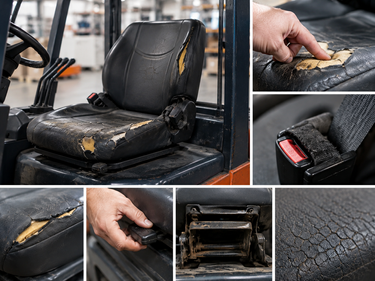
Signs Your Forklift Seat Needs Replacement
A forklift seat is more than just a place for operators to sit. It directly affects safety, productivity, operator fatigue, and long-term equipment performance. If you notice visible wear, poor support, vibration issues, or unstable seating, these are common signs your forklift seat needs replacement. Ignoring a worn forklift seat can lead to discomfort, reduced concentration, and even workplace safety risks.
In many warehouses and industrial facilities, forklifts operate for several hours each day. According to occupational safety research, prolonged exposure to vibration and poor seating posture may contribute to lower back strain, muscle fatigue, and decreased operator efficiency. That is why forklift seat replacement should not be viewed as a cosmetic upgrade alone. In many cases, replacing a damaged forklift seat is part of proper equipment maintenance and operator protection.
Why Forklift Seat Condition Matters More Than Comfort
A forklift seats affects more than operator comfort. In warehouses, logistics centers, and industrial facilities, operators may remain seated for several hours each day. Over time, a worn or unstable seat can increase vibration exposure, reduce posture support, and contribute to fatigue.
Poor seating conditions may also affect driving precision and operator concentration, especially during long shifts or repetitive material handling tasks. For businesses managing forklift fleets, timely seat replacement is part of both equipment maintenance and workplace safety management.
This is why recognizing early signs of seat deterioration is important before minor wear develops into a larger operational or safety issue.
7 Signs Your Forklift Seat Needs Replacement
Visible Cracks, Tears, or Worn Upholstery
Visible surface damage is one of the most common indicators of seat deterioration. Cracked vinyl, torn upholstery, or exposed foam often appear after years of daily industrial use.
Symptom
The seating surface may show peeling material, split seams, flattened padding, or exposed inner foam. Dirt and moisture may also begin collecting inside damaged areas.
What It May Affect
A heavily worn seating surface may reduce comfort and make cleaning more difficult in dusty warehouse environments. Once the protective outer layer is damaged, the internal foam can deteriorate more quickly.
Typical Cause
Frequent operator use, friction from entering and exiting the forklift, and exposure to temperature changes can accelerate upholstery wear.
Urgency Level
Medium to High.
Minor cosmetic wear may still be manageable temporarily, but widespread cracking or exposed cushioning usually indicates the seat should be replaced soon.
Seat Cushion No Longer Provides Support
Seat cushioning naturally compresses over time. However, when the cushion loses its ability to support the operator properly, discomfort becomes more noticeable during daily operation.
Symptom
Operators may report soreness, lower back discomfort, or numbness after short periods of use. The cushion may feel uneven, collapsed, or excessively firm.
What It May Affect
Poor support may negatively affect posture during long shifts and contribute to muscle fatigue. In high-use industrial settings, this can reduce overall operator comfort and concentration.
Typical Cause
Long-term compression, repeated heavy use, and aging foam materials often reduce the effectiveness of the seat cushion.
Urgency Level
Medium.
Although the forklift may still function normally, prolonged use of unsupported seating can gradually affect operator performance.
Suspension System Stops Absorbing Vibration
Many modern forklifts use suspension seats to reduce vibration exposure while driving across uneven warehouse floors or loading areas.
Symptom
Operators may notice increased shaking, bouncing, or harsh impacts while driving. The seat may feel rigid instead of absorbing movement smoothly.
What It May Affect
Reduced vibration absorption may increase operator fatigue during long shifts. According to ergonomic studies, prolonged whole-body vibration exposure can contribute to physical discomfort and lower driving concentration.
Typical Cause
Continuous operation on rough surfaces and long-term mechanical wear may weaken suspension performance over time.
Urgency Level
High.
Once vibration control noticeably declines, replacing the seating system is often recommended to restore proper operator support.
Seat Adjustments No Longer Work Properly
Forklift seats are designed with adjustable rails, reclining backrests, and positioning controls to accommodate different operators.
Symptom
The seat may become difficult to slide, fail to lock securely, or remain stuck in one position.
What It May Affect
Improper seating position can affect visibility, reach, and driving posture. Shared forklifts may become especially uncomfortable when adjustment systems stop functioning correctly.
Typical Cause
Worn slide rails, damaged locking mechanisms, or accumulated debris inside adjustment tracks are common causes.
Urgency Level
Medium to High.
Faulty adjustment systems should be addressed quickly to maintain stable and ergonomic seating positions.
Damaged Seat Belts or Safety Features
Safety components are among the most important parts of any forklift seating system.
Symptom
Seat belts may stop retracting correctly, locking systems may fail, or operator presence sensors may stop responding.
What It May Affect
Compromised safety features may increase injury risks during sudden stops or sharp turns. In some workplaces, damaged safety components may also create inspection or compliance concerns.
Typical Cause
Daily wear, repeated tension on seat belts, and aging mechanical components may gradually reduce safety system reliability.
Urgency Level
Very High.
Safety-related damage should be addressed immediately to help maintain safe forklift operation.
Excessive Operator Fatigue After Short Use
Operator feedback is often one of the earliest warning signs of seating problems, even before visible damage becomes severe.
Symptom
Operators may feel tired, stiff, or uncomfortable after relatively short operating periods.
What It May Affect
Physical discomfort may reduce focus and productivity during repetitive warehouse tasks. Over time, fatigue can also contribute to lower operator satisfaction and reduced efficiency.
Typical Cause
Poor cushioning, inadequate vibration control, and improper seating posture often work together to increase fatigue.
Urgency Level
Medium.
If multiple operators experience similar discomfort, the seating system should be inspected carefully.
Loose Mounting or Seat Instability
A forklift seat should remain stable during operation. Movement or wobbling can indicate mounting problems or structural wear.
Symptom
The seat shifts, rattles, tilts, or feels unstable while driving.
What It May Affect
Seat instability may reduce operator confidence and increase safety concerns, particularly during turning or lifting operations.
Loose mounting hardware can also place additional stress on seat brackets and mounting points.
Urgency Level
High.
A loose or unstable damaged forklift seat should be repaired or replaced as soon as possible to avoid further safety risks.
Normal Wear or a Sign You Need Replacement?
Not every scratch or minor cosmetic issue means you must immediately replace forklift seat components. Forklift seats naturally experience wear in demanding industrial environments.
However, the difference between acceptable wear and necessary seat upgrade for forklifts usually depends on three factors:
- Operator safety
- Structural stability
- Ergonomic performance
Minor cosmetic fading may be harmless, but cracked upholstery, failed suspension systems, broken seat belts, and unstable mounting are often clear signs your forklift seat needs replacement.
Businesses should also consider operational efficiency. A worn forklift seat may gradually affect productivity through operator discomfort, fatigue, and reduced focus. In busy warehouses, these small issues can become more significant over time.
Preventive maintenance inspections can help identify problems early. Many facilities inspect forklift seats during routine equipment checks to evaluate:
1.Cushion condition
2.Suspension function
3.Safety belt performance
4.Mounting stability
5.Adjustment mechanisms
When replacement becomes necessary, many companies choose universal suspension seats that are designed for easier installation and compatibility across different machinery types.
Lumina offers heavy-duty forklift seat solutions designed for industrial environments, with features such as durable upholstery, adjustable seating systems, suspension support, and integrated safety components that help improve long-term operator comfort and equipment usability.
Conclusion
Recognizing the signs of seat wear early can help reduce operator discomfort, improve equipment usability, and support safer daily operations. Whether managing a single forklift or an entire fleet, replacing aging seating systems before they fail completely is often more cost-effective than delaying maintenance.
When selecting a replacement, many operators and fleet managers look for features such as suspension support, adjustable positioning, durable upholstery, and broad equipment compatibility. Manufacturers like Lumina provides heavy-duty forklift seats designed for demanding industrial environments, offering ergonomic support, adjustable features, and broad equipment compatibility for easier replacement and long-term use.