
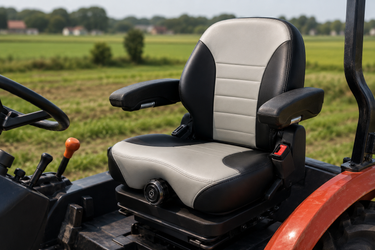
How to Choose the Right Replacement Tractor Seat (Without Buying the Wrong One)
Choosing the right replacement tractor seat is about much more than finding something that looks comfortable. The best seat is one that fits your machine correctly, matches your working conditions, supports the operator throughout the day, and delivers long-term durability.
If you're wondering how to choose replacement tractor seat options without wasting money on the wrong model, start by evaluating fitment, operating environment, usage hours, weather exposure, and operator needs. These factors often have a greater impact on satisfaction than appearance or price alone.
Whether you're replacing a worn-out seat on a compact tractor or upgrading equipment used for commercial farming, asking the right questions before purchasing can help you avoid common mistakes and improve both operator comfort and productivity.
Why Tractor Seat Replacement Is More Than Just Comfort
Many tractor owners begin looking for a replacement seat for tractor equipment when the original seat becomes uncomfortable. While comfort is important, it is only one part of the decision.
Modern agricultural equipment operators often spend several hours a day seated while mowing, plowing, transporting materials, or maintaining land. Poor seating support can contribute to fatigue, reduced concentration, and unnecessary strain on the back and shoulders.
Research from agricultural ergonomics studies has consistently shown that prolonged exposure to vibration and poor posture can increase physical stress during equipment operation. A properly selected replacement seat can help reduce vibration transmission, improve posture, and support safer operation over long working periods.
For businesses managing multiple machines, tractor seat replacement also affects productivity and maintenance costs. A durable, properly fitted seat often lasts longer and requires fewer repairs than lower-quality alternatives.
This is why understanding how to choose replacement tractor seat options correctly can save both time and money in the long run.
The 5 Questions to Ask Before Buying a Replacement Tractor Seat
Before purchasing a universal tractor replacement seat, it's important to evaluate your specific equipment and working conditions. The following questions can help narrow down the most suitable option.
Will It Actually Fit My Tractor?
The most important question is also the one most buyers overlook.
Many operators assume that if a seat is advertised as fitting a particular tractor brand, it will automatically fit their machine. In reality, mounting dimensions, bolt patterns, slide rail spacing, and seat base design are often more important than brand compatibility.
Before purchasing a replacement seat for tractor equipment, measure:
- Mounting bolt pattern
- Installation width
- Installation length
- Available clearance space
Many universal tractor replacement seat models are designed with adjustable mounting systems to fit a wide range of equipment. However, confirming dimensions before ordering can prevent installation problems later.
For fleet managers and equipment dealers, verifying fitment specifications can significantly reduce return rates and replacement delays.
How Rough Is My Working Environment?
Not all tractors operate under the same conditions.
A tractor used occasionally on relatively smooth property may not require the same seating system as equipment operating daily on rough terrain, uneven fields, orchards, or construction sites.
The rougher the environment, the more important suspension performance becomes.
Seats equipped with mechanical suspension systems help absorb vibration and reduce operator fatigue. Some models also include weight-adjustable suspension mechanisms that allow operators to customize ride performance according to their body weight.
If vibration is a daily concern, selecting a suspension-equipped universal tractor replacement seat may provide noticeable long-term benefits.
How Many Hours Do I Sit Each Day?
Operating duration should heavily influence your purchasing decision.
For occasional use, a basic replacement seat for tractor applications may provide sufficient support. However, operators spending four, six, or even eight hours per day in the seat often benefit from upgraded ergonomic features.
Long-duration operators should prioritize:
- High-density cushioning
- Backrest adjustment
- Armrest support
- Vibration reduction
- Ergonomic seat contours
Multi-density foam cushioning has become increasingly popular because it helps distribute pressure more evenly and maintains support during extended use.
For commercial agricultural operations, comfort often translates directly into improved productivity and reduced operator fatigue.
Do I Need Weather Resistance?
Weather exposure is another factor that many buyers underestimate.
The ideal upholstery material often depends on whether the tractor has an open or enclosed cab.
For open-cab tractors, PVC upholstery is usually the preferred choice. PVC materials offer excellent resistance to moisture, UV exposure, mud, and frequent cleaning. They are often easier to maintain in outdoor agricultural environments.
For enclosed-cab tractors, fabric upholstery may provide a softer seating experience and improved breathability during extended operation.
When considering how to choose replacement tractor seat models, matching the upholstery material to the operating environment can improve both durability and comfort.
Who Uses the Tractor?
The final question is surprisingly important.
If only one person operates the tractor, seat adjustments may not need to change frequently. However, many farms, landscaping companies, and agricultural businesses have multiple operators sharing the same machine.
In these situations, quick adjustment features become much more valuable.
Seats with adjustable backrests, sliding rails, armrests, and suspension settings allow operators of different heights and body types to find a comfortable driving position quickly.
For shared equipment, fast and simple adjustment systems can significantly improve daily usability.
Most Common Replacement Tractor Seat Buying Mistakes
Even experienced equipment owners occasionally make purchasing decisions that lead to poor fitment or unnecessary costs. Understanding these common mistakes can help buyers make more informed choices.
Mistake 1: Only Checking Tractor Brand
One of the biggest misconceptions is believing that brand compatibility alone guarantees proper fit.
Two tractors from the same manufacturer may use completely different mounting systems. Always verify installation dimensions in addition to brand recommendations.
Mistake 2: Ignoring Mounting Dimensions
This mistake often leads directly to installation problems.
A seat may appear compatible online, but without checking bolt patterns and mounting measurements, installation can become difficult or impossible.
When selecting a replacement seat for tractor equipment, dimensional compatibility should always be confirmed before purchase.
Mistake 3: Buying Air Suspension for Light-Duty Work
Air suspension seats provide excellent vibration isolation, but they are not necessary for every application.
For occasional mowing, property maintenance, or light agricultural tasks, a quality mechanical suspension seat may offer sufficient performance at a lower cost.
Choosing a suspension system that matches actual operating conditions often delivers better value.
Mistake 4: Choosing Comfort Over Durability
Many buyers focus entirely on softness when evaluating seating options.
However, overly soft materials can wear quickly under heavy agricultural use. Durability, structural strength, and upholstery quality are equally important considerations.
A seat that remains supportive after years of use often provides greater value than one that feels comfortable initially but deteriorates rapidly.
Mistake 5: Ignoring Operator Weight Rating
Suspension performance depends heavily on proper weight matching.
Many operators overlook weight capacity specifications when purchasing a universal tractor replacement seat. As a result, suspension systems may not perform as intended.
Seats with adjustable weight settings can provide better support across a wider range of operators and working conditions.
Need Replacement Seats for Agricultural or Heavy Equipment Applications?
Choosing the right replacement seat for tractor equipment ultimately comes down to matching the seat to the machine, the operator, and the working environment.
The best solution is not always the most expensive option. Instead, buyers should focus on compatibility, durability, ergonomic support, and practical features that align with actual operating requirements.
For agricultural businesses, landscaping contractors, equipment dealers, and individual tractor owners, investing time in evaluating these factors can help avoid unnecessary replacement costs and improve long-term operator comfort.
Modern seating solutions are also increasingly designed for versatility. Many universal tractor replacement seat models can be adapted to multiple types of agricultural and industrial equipment, including tractors, riding mowers, forklifts, excavators, aerial lifts, and other heavy-duty machinery.
Conclusion
Understanding how to choose replacement tractor seat options correctly starts with asking the right questions before purchasing. Fitment, suspension performance, weather resistance, operator comfort, and long-term durability all play important roles in selecting the most suitable seat.
For those seeking dependable seating solutions for tractors and other heavy equipment applications, manufacturers such as Lumina offer a range of durable suspension seats designed to provide broad compatibility, ergonomic support, and reliable performance in demanding working environments.